We hear it all the time. The world faces enormous challenges—from climate issues to social and economic breakdowns, wars, and democracies under pressure. For instance, 70% of the world’s population now lives under autocratic regimes. Yet, the necessary changes don’t seem to happen.
Why? Are we, as a species and society, incapable of acting before it’s too late? Why are the most pressing problems ignored when it comes to action? Is it too late, or can we do something to maintain hope for a long and beautiful future for our many descendants?
The systems do not reward long-term thinking
Our societies and political systems are designed to reward short-term gains. Politicians focus on re-election, many companies still prioritise profit over sustainability (because they have to), and most people think about their own immediate needs (which many are also compelled to do).
Major decisions requiring long-term investments and risky choices are often postponed or ignored. Even when we know the future depends on action now, it feels easier to do nothing because the system doesn’t reward those who take responsibility. They might just end up losing power to other short-sighted but more popular individuals.
The pressure of crisis: only when we have no choice
History shows that people and societies often act only when forced to. When a crisis hits us directly—such as during pandemics, wars, or natural disasters—we can mobilise quickly. But we rarely react beforehand.
This “crisis pressure” is both a strength and a weakness. Change is possible, but it often requires massive losses and suffering before there’s enough momentum to drive action. The climate crisis may end up being an example of this—where action only truly happens when the damage is irreversible. We would act immediately and collectively, I hope, if an asteroid were on a collision course with Earth, but historically, humanity is poor at planning and prioritising prevention.
Technology can help, but not alone
Many hope that technological innovation will save us—that solar energy, recycling, and other technologies will become so efficient and cheap that they force the system to change course. But technology is only part of the solution. Without political will and social changes, technology alone won’t solve the fundamental problems.
Moreover, many green technologies require large amounts of raw materials, which are concentrated in countries that may not share Western interests, leading to a challenging imbalance of values. This creates new dependencies and geopolitical challenges that complicate the technological solution more than it appears from the astronaut’s perspective of Earth without visible national borders and economies.
Collapse as a catalyst: when everything falls apart
If the systems around us don’t change, they will sooner or later collapse. History has shown that collapse is often a prerequisite for radical change. Ecosystems, economies, and social systems cannot function indefinitely without adapting.
When a collapse comes, the world will be forced to find new ways to function. But it’s a costly price to pay—for both people and the planet. It seems so foolish because it’s far more profitable to act now rather than much later.
Is there hope, or are we too late?
It’s easy to feel powerless. When none of those in power dare to act, and when the system resists change, it seems as if we’re doomed to fail. Yes, it seems as if the human species harbours a flawed DNA that makes us, as biological beings, incapable of caring for unborn generations.
But even small actions, which don’t seem significant now, can help create change over time. The question is whether we, as a society, can find the will to act while we still have time—or whether we’ll only wake up to change when it’s too late. No one knows. History is filled with examples of both scenarios, and the answer lies in how we choose to respond today.
Small solutions: local action can make a difference
Although global problems require global solutions, it’s often local communities that lead the way. Local initiatives and smaller entities can create innovation and experiment with solutions that larger institutions avoid.
Cities, grassroots movements, and individuals can work for change, even when governments and companies don’t. These small-scale solutions can’t save the world alone, but they can provide hope and inspire larger changes. And fortunately, almost everyone on the planet wants global warming to be kept in check. So there’s hope in all of us for a fertile, safe, and beautiful future. It’s just hard to activate that hope as an individual.
And you can indeed eat less beef, fly a bit less, and build sustainably—but does it really help? A thought-provoking article from the scientific journal Nature provides an encouraging answer to this very question, which occupies many dinner conversations around the world.
Even small, individual actions can have a significant impact, especially when combined with larger, systemic changes. An article from the renowned journal Nature highlights that the world’s wealthiest 20%—a group that includes most Danes—have a disproportionately large climate footprint. According to the researchers, this group could reduce the overall strain on the planet’s boundaries by up to 53% by living more climate-friendly.
If this top 20% changed their behaviour, it could reduce the pressure on the planet’s biosphere and resources so significantly that we’d once again be within what researchers call the “safe operating space”—the safe zone for the planet’s carrying capacity. It’s a reminder that our actions matter and that the ball is very much in our court. In other words, we have the opportunity to take responsibility and create a real effect here and now.
Cathedral thinking
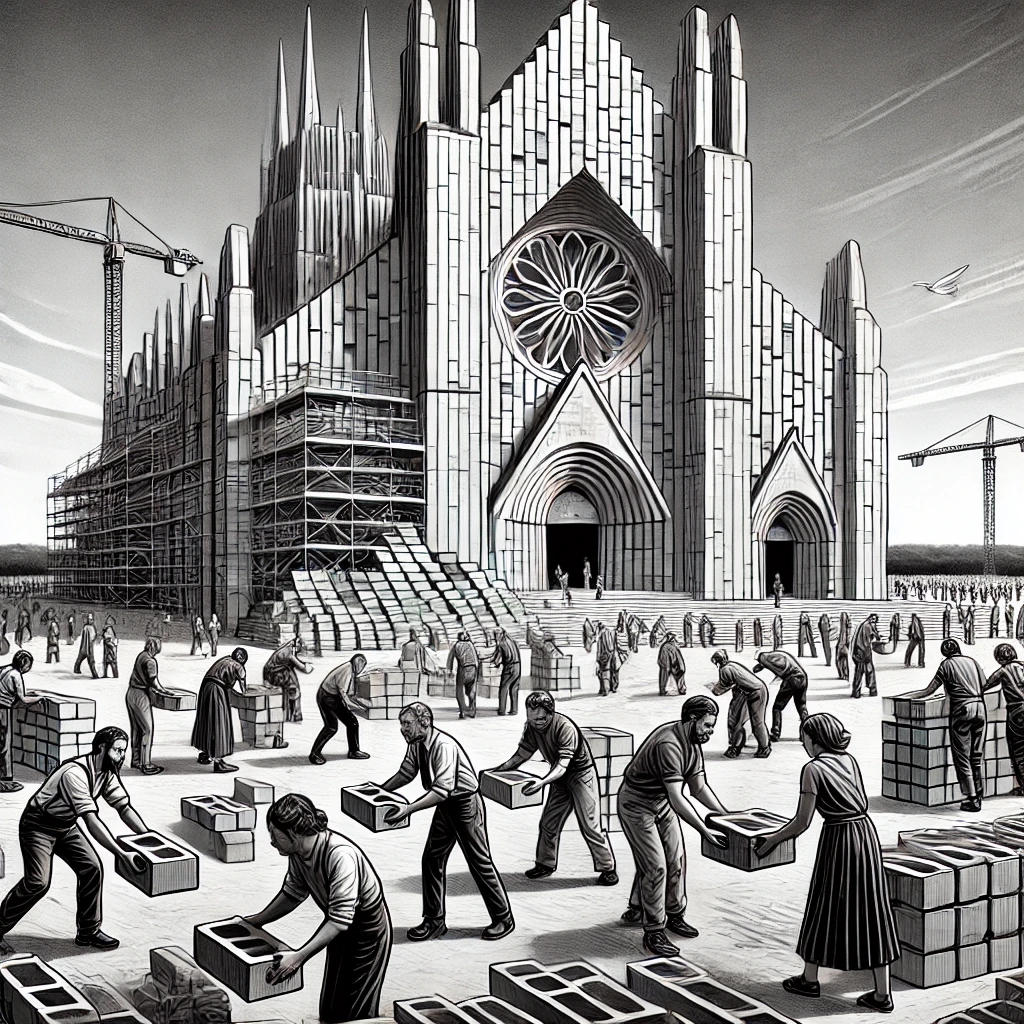
Kim Stanley Robinson uses a beautiful metaphor in his climate dystopian novel The Ministry for the Future. He compares long-term thinking to the building of cathedrals in the Middle Ages. Back then, it could take several generations to build a cathedral. The stonemason who laid the first stone would never live to see the completion of the project. Yet, they built with hope, belief, and a sense of purpose for future generations.
This kind of “cathedral thinking” is what we need today. We must make decisions and take action now, knowing that we may not see the results in our lifetime. We must build for a future that we may not personally experience but that our descendants will inherit.
It requires courage, vision, and a deep sense of responsibility. And most importantly, it requires us to act now—before hesitation causes the future to fade entirely.
References
- Nature (https://www.nature.com)
- Robinson, Kim Stanley. The Ministry for the Future.
 eudaimon.dk
Leave a comment