
Possible individual responses
How do we navigate a world unraveling around us while maintaining integrity, dignity, and a sense of purpose? If the trajectory is set, how do we live in a way that still holds meaning?
The illusion of control
Many of us have been raised with the belief that human ingenuity will solve all problems. We have been told that reason, progress, and democracy will guide us toward a better future. But as we now witness a growing number of authoritarian regimes, the erosion of democratic values, and a global economic system still addicted to extractive growth, it is increasingly difficult to maintain such faith.
It is tempting to believe that by sounding the alarm loudly enough, by convincing enough people, by finding the right political solutions, we might still be able turn the tide. Yet history suggests otherwise. Civilizations have collapsed before, not for lack of intelligence but for lack of wisdom. Knowing what must be done has never guaranteed that it will be done. So what remains, if, or when, action seems futile?
Possible individual responses
If we cannot change the trajectory of the world, we can still choose how to inhabit it. We can resist the pull of apathy and despair by grounding ourselves in the relationships, thoughts, and actions that still hold meaning.
Parenting and educating in the midst of collapse
Raising children in an era of existential crisis feels paradoxical. How do we prepare them for a future we cannot promise? Perhaps the answer lies not in offering false hope but in giving them the tools to navigate complexity. To teach them resilience, wisdom, adaptability, and the ability to think critically about the systems they are inheriting. To let them understand that even in collapse, there is space for dignity, for love, for wonder, and for laughter.
Friendship and love as acts of defiance
If the world is unraveling, then deep human connection becomes a radical stance. To engage in meaningful friendships, to cultivate love, to refuse to become numb – this is resistance. It is a refusal to let the dehumanization of our age strip us of what makes life worth living.
Living as a world citizen without illusions
To be a world citizen in this era is not to be an idealist, hoping for global unity and cooperation. It is to acknowledge that systemic change is unlikely while still choosing to act locally, ethically, and with care for all living things – except perhaps viruses, certain bacteria, and tyrants. Not because we expect to solve the crisis but because doing the right thing, even in the face of futility, matters – at least to ourselves.
Finding dignity in clear-sightedness
There is dignity in witnessing reality without delusion. In resisting both blind optimism and fatalistic cynicism. To see collapse clearly, to acknowledge our limitations, and yet to continue thinking, questioning, and engaging – this is an existential stance that is worth cultivating.
Beyond hope, toward meaning
Perhaps we have been asking the wrong question. Instead of asking how can we fix this?, we should be asking how do we live well, even as it breaks or if we won’t succeed in fixing it?
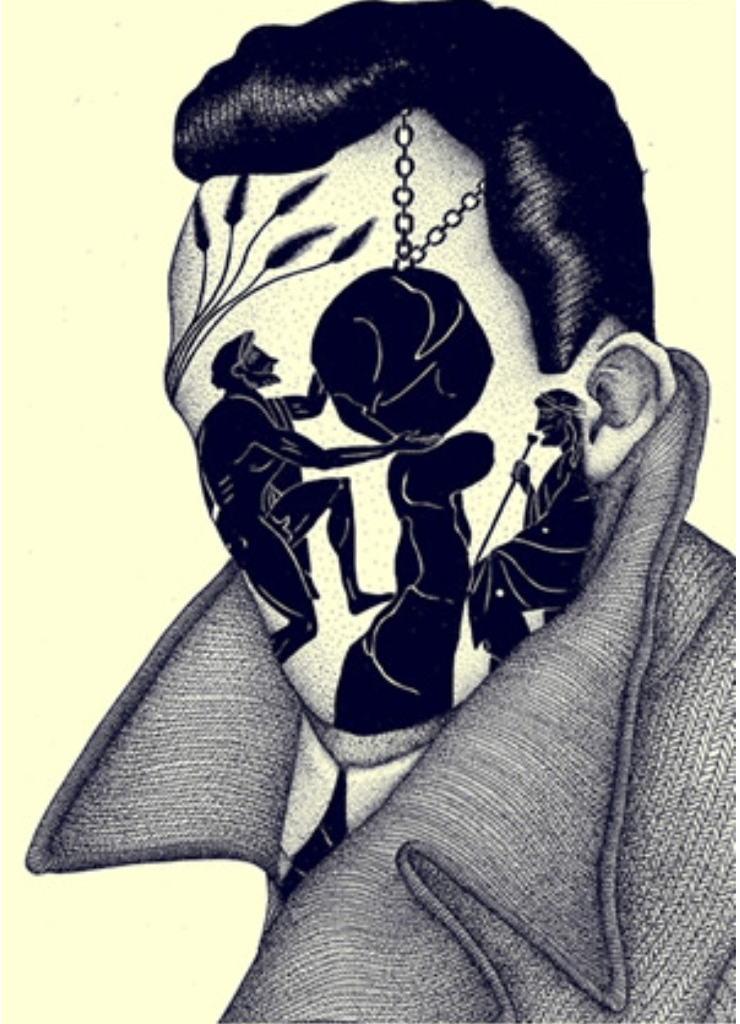
The philosopher Albert Camus spoke of the absurdity of life, how meaning is not something we find but something we create. To embrace the absurdity of our predicament is not to resign ourselves to passivity but to act in spite of it.
We may not be able to stop what is coming. But we can still choose how we meet it. With integrity. With care. And above all, with the quiet dignity of those who refuse to look away.
 eudaimon.dk
Leave a comment